Fullstack + AI Web Development Roadmap 2026
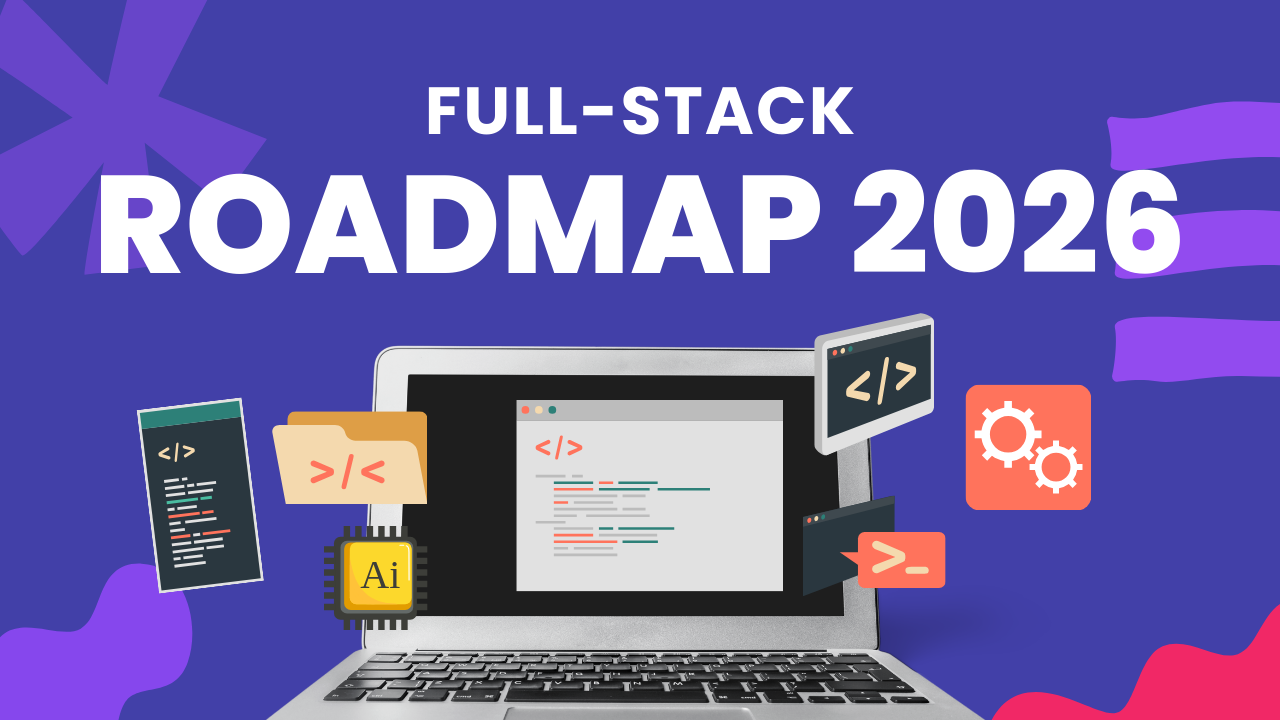
Fullstack + AI Web Development Roadmap 2026 maps a 2026 full-stack and AI learning path into concrete stacks, project ideas, and build order. Use it on AceDevHub to decide what to learn next, which repos to download, and how to sequence portfolio work across frontend, backend, and AI modules. This guide presents a complete Fullstack + AI Web Development Roadmap for 2026, designed to help developers understand what to learn, in what order, and how to build real production-ready applications.
- Html
- Flexbox
- CSS Grid
- Vercel
- Netlify
- Render
- Cloud Deployment
- Monitoring
- Logging
- Embeddings
- AI Agents
- DevOps
- Auth Patterns
- Testing
- AI Development
- Developer Roadmap
Tech stack
Tools we use
- LA
LangChain
Core tool
- LA
LangGraph
Core tool
- OP
OpenAI
Core tool
- VE
Vercel AI SDK
Core tool
- Nx
Next.js
App framework
- Pg
PostgreSQL
Data layer
- PG
pgvector
Core tool
- No
Node.js
Runtime
- JA
JavaScript
Core tool
- TS
TypeScript
Typed contracts
- Re
React
UI composition
- EX
Express.js
Core tool
Build guide
How to build this project
How to build Fullstack + AI Web Development Roadmap 2026
This guide is written for AceDevHub visitors — you do not need a YouTube description to get started. Difficulty: Beginner.
What this project is
Fullstack + AI Web Development Roadmap 2026 maps a 2026 full-stack and AI learning path into concrete stacks, project ideas, and build order. Use it on AceDevHub to decide what to learn next, which repos to download, and how to sequence portfolio work across frontend, backend, and AI modules.
What you get
- Full project source code archive (ZIP)
- Environment and run instructions in the repo README
- Module-oriented folders matching the original curriculum
Skills you will practice
- Apply LangChain in a realistic beginner codebase
- Apply LangGraph in a realistic beginner codebase
- Apply OpenAI in a realistic beginner codebase
- Apply Vercel AI SDK in a realistic beginner codebase
- Apply Next.js in a realistic beginner codebase
- Apply PostgreSQL in a realistic beginner codebase
- Apply pgvector in a realistic beginner codebase
- Apply Node.js in a realistic beginner codebase
- Apply JavaScript in a realistic beginner codebase
- Apply TypeScript in a realistic beginner codebase
- Apply React in a realistic beginner codebase
- Apply Express.js in a realistic beginner codebase
Implementation approach
Work through the repository in this order:
- Choose your track — Pick frontend, backend, AI, or full-stack emphasis for the next 90 days.
- Stack the fundamentals — Solidify TypeScript, Git, testing, and one deployment target.
- Ship two portfolio projects — One product UI and one API/service with observability.
- Add AI responsibly — Integrate RAG or agents with scoped context — not a generic chatbot.
Tech stack
- LangChain
- LangGraph
- OpenAI
- Vercel AI SDK
- Next.js
- PostgreSQL
- pgvector
- Node.js
- JavaScript
- TypeScript
- React
- Express.js
Architecture patterns
- JWT Authentication
- REST API
- WebSockets
- RAG
Getting started
- Sign in to AceDevHub and download the source archive from this page.
- Extract the ZIP and open the README for environment variables and prerequisites.
- Install Node.js LTS, run
npm install(orpnpm install) in the project root. - Create a local PostgreSQL database and apply migrations or seed scripts from the repo.
- Run the dev script, verify the app boots, then follow the implementation sections below.
Stretch ideas
- Add automated tests for critical paths
- Instrument logging and health checks for production
- Publish a trimmed portfolio variant with seed data
Sign in on AceDevHub to download the archive, then treat this page as your permanent project reference.