

Redis Full Course 2026 | Caching, Rate Limiting, Pub/Sub
Redis Full Course 2026 | Caching, Rate Limiting, Pub/Sub is a complete curriculum archive on AceDevHub — chapter folders, starter code, and exercises organized in teaching order. This beginner-level track covers Redis so you can follow module-by-module from setup to capstone without relying on a video description. You will work through 14 focused areas including what redis is and why we need it and why redis is used as a fast in-memory layer. Learn Redis from scratch in this complete beginner-friendly full course.
- Full Course
- Testing
- Beginner Friendly
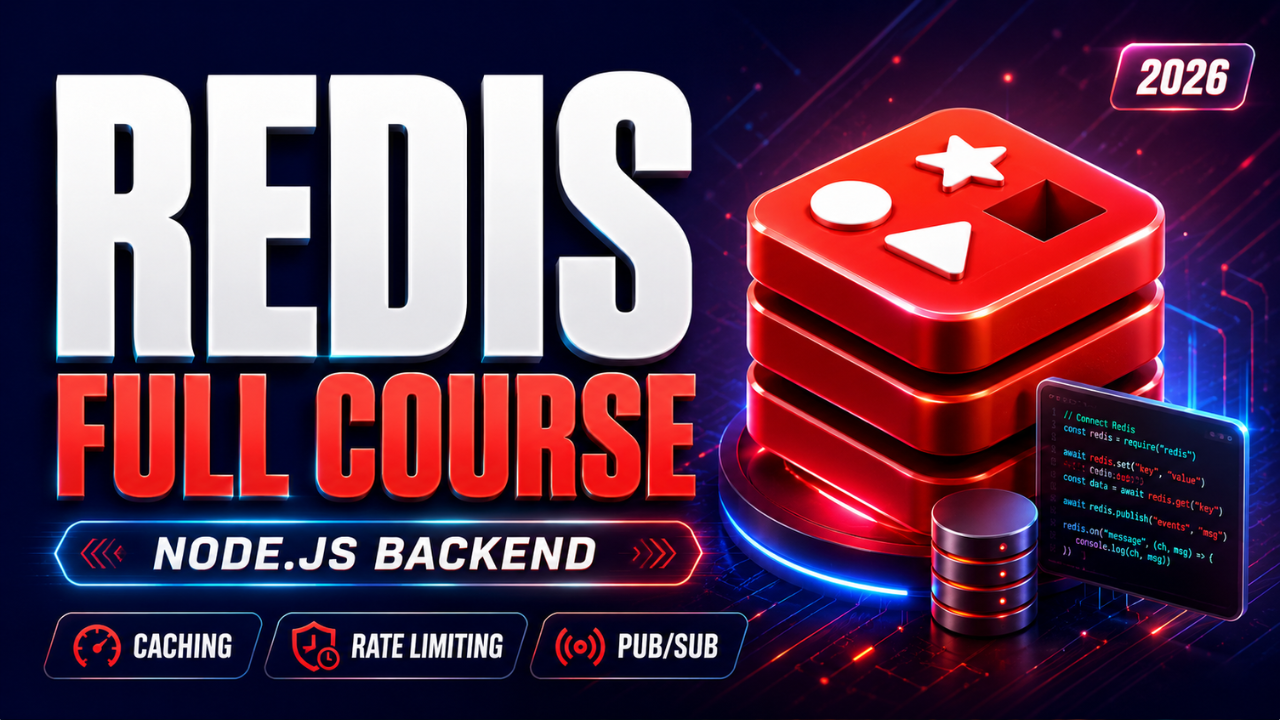
Tech stack
Tools we use
- Rd
Redis
Cache / queues
Build guide
How to build this project
How to build Redis Full Course 2026 | Caching, Rate Limiting, Pub/Sub
This guide is written for AceDevHub visitors — you do not need a YouTube description to get started. Difficulty: Beginner.
What this project is
Redis Full Course 2026 | Caching, Rate Limiting, Pub/Sub is a complete curriculum archive on AceDevHub — chapter folders, starter code, and exercises organized in teaching order. This beginner-level track covers Redis so you can follow module-by-module from setup to capstone without relying on a video description.
What you get
- Full project source code archive (ZIP)
- Environment and run instructions in the repo README
- Module-oriented folders matching the original curriculum
Skills you will practice
- What Redis is and why we need it
- Why Redis is used as a fast in-memory layer
- Redis setup with Docker
- Installing Redis client package in Node.js
- Creating a reusable Redis connection file
- Testing Redis connection with PING
- Redis data types
- Redis keys and values
- Strings, hashes, lists, sets, and sorted sets
- Redis expiry and TTL
Implementation approach
Work through the repository in this order:
- Step 1 — What Redis is and why we need it
- Step 2 — Why Redis is used as a fast in-memory layer
- Step 3 — Redis setup with Docker
- Step 4 — Installing Redis client package in Node.js
- Step 5 — Creating a reusable Redis connection file
- Step 6 — Testing Redis connection with PING
- Step 7 — Redis data types
- Step 8 — Redis keys and values
Tech stack
- Redis
Getting started
- Sign in to AceDevHub and download the source archive from this page.
- Extract the ZIP and open the README for environment variables and prerequisites.
- Run the dev script, verify the app boots, then follow the implementation sections below.
Stretch ideas
- Add automated tests for critical paths
- Instrument logging and health checks for production
- Publish a trimmed portfolio variant with seed data
Sign in on AceDevHub to download the archive, then treat this page as your permanent project reference.